Is a Furnace Filter the Same as an Air Filter
Is a Furnace Filter the Same as an Air Filter? Key Differences for AC Filters Users
- 1. Basic Definition of Furnace Filter and General Air Filter
- 1.1 What Is a Furnace Filter?
- 1.2 What Is a General Air Filter?
- 2. Core Differences Between Furnace Filters and Air Filters
- 2.1 Filtration Precision and Particle Capture Capacity
- 2.2 Core Service Objectives
- 2.3 Application Scenario Limitations
- 3. Can Furnace Filters Replace AC Air Filters?
- 3.1 Hidden Dangers of Wrong Replacement
- 3.2 Why Dedicated AC Filters Are Irreplaceable
- 4. How to Choose the Right Filter for Your HVAC System
- 4.1 Select Filters According to Equipment Type
- 4.2 Reasonable Replacement Cycle
- 5. Final Verdict: Furnace Filter vs Air Filter
Many homeowners and HVAC system owners often encounter confusion when shopping for ventilation and purification accessories: is a furnace filter the same as an air filter? The two terms are frequently used interchangeably in daily conversations, which leads to wrong product selections, poor system performance, and even shortened service life of HVAC equipment. For anyone who relies on efficient ac filters to maintain indoor air quality and system operating stability, distinguishing between furnace filters and general air filters is essential. This guide breaks down their definitions, functional differences, application scenarios, and selection standards to help users make informed decisions for their heating, ventilation, and air conditioning systems.
1. Basic Definition of Furnace Filter and General Air Filter
To clarify whether a furnace filter is identical to an air filter, we first need to define the two types of filtration components and their core design purposes. Although both belong to air filtration accessories and work to trap airborne particles, their design orientations and service targets are fundamentally different.
1.1 What Is a Furnace Filter?
A furnace filter is a specialized filtration component designed exclusively for residential and commercial furnace heating systems. Its primary installation position is at the air intake of the furnace unit, where incoming air passes through the filter before entering the heating system’s internal components. The core design goal of a furnace filter is to protect furnace machinery rather than focusing purely on indoor air purification. It blocks large airborne contaminants such as dust, lint, pet hair, and debris from entering the furnace’s blower motor, heat exchanger, and internal ducts. By reducing particle accumulation inside the furnace, this filter prevents equipment clogging, overheating, and mechanical wear, ensuring the long-term stable operation of the heating system.
1.2 What Is a General Air Filter?
A general air filter is a broad-category filtration product with a single core goal: improving indoor air quality. This type of filter has a wider application range, covering standalone air purifiers, ventilation systems, and central air conditioning systems. Different from furnace filters, general air filters focus on removing tiny harmful particles in living and working spaces, including fine dust, pollen, mold spores, bacteria, and even tiny aerosol particles. Its design priority is indoor air purification effect, reducing air pollutants that affect human breathing health, rather than protecting mechanical equipment.
2. Core Differences Between Furnace Filters and Air Filters
While furnace filters and air filters share the basic function of filtering air particles, they differ significantly in filtration precision, structural design, service scenarios, and performance standards. Understanding these differences is critical for users who need to replace ac filters and maintain HVAC system efficiency.
2.1 Filtration Precision and Particle Capture Capacity
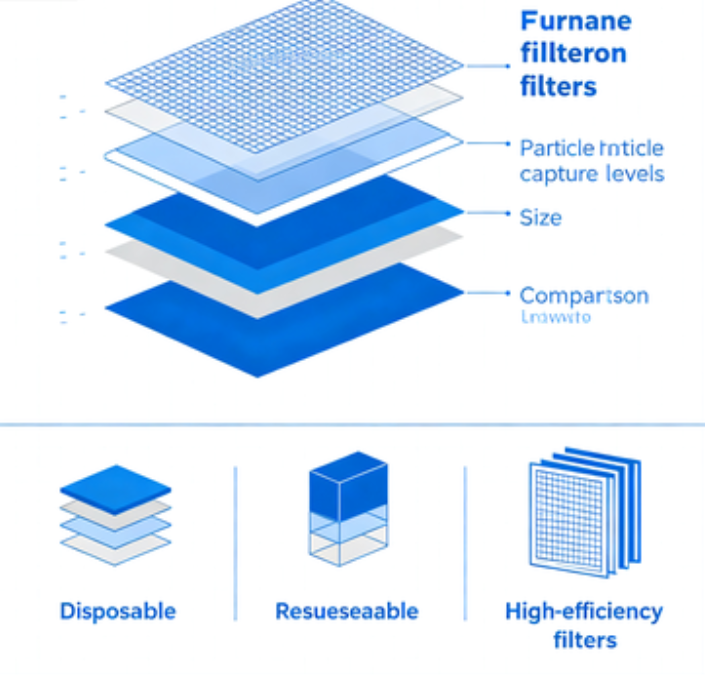
Furnace filters are low-precision filtration products by design. Most standard furnace filters only capture large visible particles above 10 microns, focusing on preventing large debris from damaging furnace internal parts. Their mesh structure is relatively loose to ensure unobstructed air flow, as excessive air resistance will directly reduce the heating efficiency of the furnace and increase energy consumption.
In contrast, conventional air filters, especially high-efficiency air filters matched with AC systems, adopt dense fiber structures and can capture tiny particles below 2.5 microns. Many high-grade ac filters even achieve ultra-fine filtration effects, effectively removing inhalable pollutants that cannot be blocked by furnace filters, which directly improves indoor air cleanliness and solves common air quality problems such as haze, pollen allergy, and indoor dust accumulation.
2.2 Core Service Objectives
The essential difference between the two filters lies in their service objects. Furnace filters serve HVAC heating equipment. All performance designs revolve around protecting furnace components, reducing equipment failure rates, and maintaining heating system efficiency. Their impact on indoor air quality is limited and secondary.
Air filters, including mainstream ac filters used in central air conditioning systems, serve human living environments. Their core value is to purify circulating indoor air, reduce harmful pollutants, and create a healthy breathing environment. Equipment protection is only an auxiliary function of air filters, not their core positioning.
2.3 Application Scenario Limitations
Furnace filters are only applicable to furnace heating systems and cannot be universally used in air conditioning or air purification equipment. Using a furnace filter in an AC system will lead to insufficient filtration precision, failure to improve indoor air quality, and even cause secondary dust circulation in the room.
AC air filters are suitable for central air conditioning, ducted ventilation systems, and multi-functional HVAC equipment. They can adapt to year-round air circulation filtration needs, whether in heating or cooling seasons, and are more versatile than single-function furnace filters.
3. Can Furnace Filters Replace AC Air Filters?
This is the most concerned question for most HVAC system users. In short, furnace filters cannot replace professional ac filters, and long-term replacement use will bring multiple hidden dangers to equipment and indoor environment.
3.1 Hidden Dangers of Wrong Replacement
If users install ordinary furnace filters in AC systems instead of dedicated ac filters, the loose filter structure cannot intercept fine pollutants. A large number of tiny dust, pollen and mold spores will circulate with the AC air duct, resulting in continuous deterioration of indoor air quality, which is easy to induce respiratory discomfort and allergic symptoms. In addition, unfiltered fine particles will accumulate inside the AC duct and unit, increasing the cleaning difficulty of the equipment and accelerating the aging of internal parts.
3.2 Why Dedicated AC Filters Are Irreplaceable
Professional ac filters balance air flow rate and filtration precision perfectly. On the premise of ensuring smooth air circulation of the air conditioner and no increase in energy consumption, they efficiently filter fine pollutants in the air, and can also adapt to the long-term circulating operation mode of AC systems. Whether it is household central air conditioning, commercial central ventilation equipment or industrial air conditioning systems, dedicated ac filters are the standard configuration to ensure system operation and air quality.
4. How to Choose the Right Filter for Your HVAC System
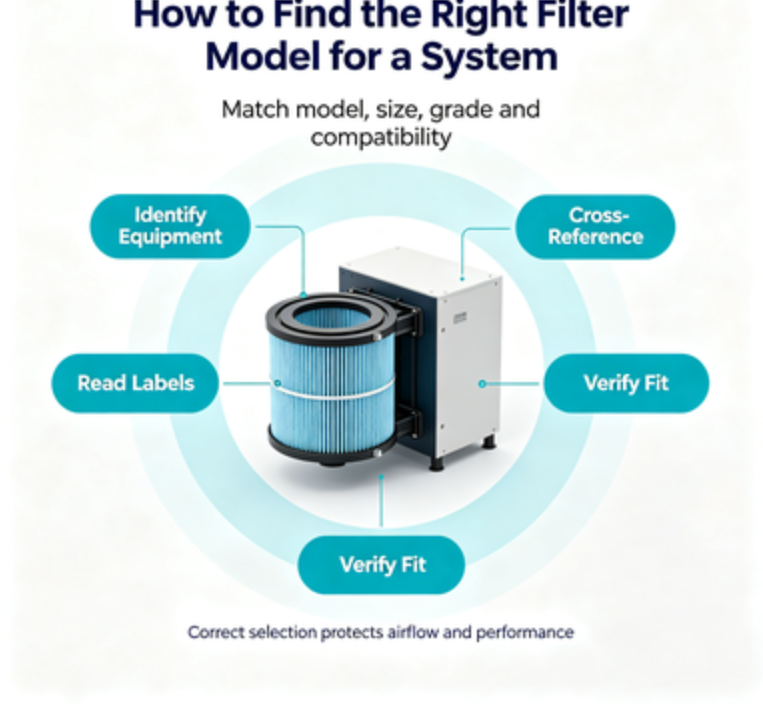
To avoid mismatched filter selection, users need to match filters according to equipment types and actual use needs, and standardize the replacement cycle of ac filters and furnace filters.
4.1 Select Filters According to Equipment Type
For independent furnace heating systems, select standard furnace filters to protect equipment and ensure heating efficiency. For air conditioning systems and integrated HVAC cooling and heating systems, must select professional ac filters to meet the dual needs of equipment protection and indoor air purification.
4.2 Reasonable Replacement Cycle
Furnace filters are recommended to be replaced every 1-3 months during the heating season due to their low precision and easy dust accumulation. Dedicated ac filters have a more stable structure and stronger dirt holding capacity, and the replacement cycle can be maintained at 3-6 months according to indoor environment cleanliness, which is more durable and cost-effective.
5. Final Verdict: Furnace Filter vs Air Filter
To sum up, a furnace filter is not the same as a general air filter or professional ac filters. They are two different filtration products with overlapping basic functions but completely different design positioning, performance parameters and application scenarios. Furnace filters focus on heating equipment protection with low filtration precision, while ac filters focus on indoor air purification while protecting air conditioning equipment, with higher filtration efficiency and wider applicability.
Correctly distinguishing and matching filters is not only the key to extending the service life of HVAC equipment and reducing energy consumption, but also an important guarantee for maintaining long-term indoor air health. Choosing dedicated ac filters for air conditioning systems is the most scientific and effective maintenance method for every HVAC user.
Where to Buy Furnace Filters
Related Article