
Screw Air Compressor: Working Principle, Types, Benefits & Industrial Applications 2026
Screw Air Compressor: Working Principle, Types, Benefits & Industrial Applications 2026
- What Is a Screw Air Compressor?
- How Does a Screw Air Compressor Work?
- Main Types of Screw Air Compressor
- Key Advantages of Screw Air Compressor Over Traditional Compressors
- Common Industrial Applications of Screw Air Compressor
- Daily Maintenance Tips for Screw Air Compressor
- FAQs About Screw Air Compressor
- Final Thoughts
A screw air compressor is the most widely used positive displacement industrial air compression equipment in modern manufacturing and commercial fields. Unlike traditional piston compressors, a screw air compressor delivers continuous, stable, and pulsation‑free compressed air, making it the core power source for pneumatic tools, automated production lines, and industrial air supply systems. If you are looking for a high‑efficiency, low‑noise, and long‑service‑life air compression solution, understanding the core knowledge of a screw air compressor is essential. This guide covers its working principle, main types, key advantages, industrial uses, and maintenance tips to help you select and use a screw air compressor correctly.
What Is a Screw Air Compressor?
A screw air compressor (also known as a rotary screw air compressor) is a volumetric compression device that relies on two interlocking helical male and female rotors to complete air compression. It belongs to the positive displacement compressor category. Through rotor rotation, the equipment changes the internal cavity volume to realize air suction, compression, and exhaust in a continuous cycle.
Compared with conventional piston air compressors, the screw air compressor cancels reciprocating mechanical structures. It features rotary continuous operation, which completely solves the problems of unstable air pressure, high vibration, and loud noise of traditional compressors. For this reason, the screw air compressor has gradually replaced piston compressors and become the mainstream equipment for industrial compressed air supply.
How Does a Screw Air Compressor Work? (Core Working Principle)
The working process of a screw air compressor is divided into three closed‑loop stages: air intake, air compression, and air exhaust. The whole operation is automatic and continuous without intermittent pause, ensuring stable air output at all times.
1. Air Intake Stage
When the screw air compressor starts, the motor drives the male and female rotors to rotate in opposite directions. The spiral grooves of the rotors form a negative pressure cavity. Under atmospheric pressure, external air is filtered through the air filter and sucked into the rotor groove space. The intake volume is automatically adjusted according to the equipment load to avoid energy waste.
2. Air Compression Stage
As the rotors continue to mesh and rotate, the volume of the air cavity formed by the spiral grooves gradually shrinks. The inhaled air is continuously squeezed, and the air pressure rises steadily. For oil‑injected screw air compressors, a small amount of lubricating oil is injected during this process to cool, lubricate, and seal the rotor gap, improving compression efficiency. For oil‑free screw air compressors, precise mechanical sealing is adopted to complete dry compression without oil pollution.
3. Air Exhaust Stage
When the compressed air reaches the preset pressure value, the rotor cavity is aligned with the exhaust port. The high‑pressure compressed air is discharged out of the machine body, and after oil‑gas separation, cooling, and drying treatment, it forms clean and stable industrial compressed air for terminal equipment use.
Main Types of Screw Air Compressor
According to lubrication methods and working modes, mainstream screw air compressor products on the market are divided into two core categories, which are suitable for different industrial scenarios and production standards.
1. Oil‑Injected Screw Air Compressor
The oil‑injected screw air compressor is the most cost‑effective and widely used type. It injects special compressor oil during operation to cool high‑temperature compressed air, lubricate rotor operation, and seal tiny gaps. This type of screw air compressor has low manufacturing cost, stable operation, high compression efficiency, and low failure rate. It is suitable for most ordinary industrial scenarios such as machinery processing, construction, automobile maintenance, and packaging production.
2. Oil‑Free Screw Air Compressor
The oil‑free screw air compressor realizes 100% oil‑free air compression through precision rotor processing and non‑oil lubrication technology. The discharged compressed air has no oil pollution and meets high‑standard clean air requirements. Although the price is higher, it is indispensable in industries with strict hygiene and purity standards, such as food processing, pharmaceutical production, medical equipment, and electronic manufacturing.
3. Variable Frequency Screw Air Compressor (Energy‑Saving Type)
As an upgraded version of the ordinary screw air compressor, the variable frequency screw air compressor adjusts the motor speed in real time according to the actual air consumption. It avoids no‑load power consumption, effectively reducing energy consumption by 20%–30%. It is the preferred model for factories with unstable air consumption and long‑term continuous operation.
Key Advantages of Screw Air Compressor Over Traditional Compressors
The popularity of the screw air compressor in the industrial field stems from its comprehensive performance advantages, which make up for almost all the defects of traditional piston compressors.
1. Stable and Pulsation‑Free Air Output
The screw air compressor adopts continuous rotary compression, with no intermittent exhaust. The air pressure output is stable without obvious fluctuation, which can perfectly adapt to automated precision production equipment and avoid production errors caused by unstable air pressure.
2. Low Noise and Low Vibration
There is no reciprocating impact structure inside the screw air compressor. The rotor runs smoothly at low speed, with low vibration and operating noise as low as 60–75 decibels. It meets factory environmental protection standards and improves the working environment of workers.
3. Long Continuous Working Life
The structural design of the screw air compressor is simple and durable, with few wearing parts. It supports 24‑hour uninterrupted continuous operation, and the service life of the main engine can reach more than 80,000 hours, which greatly reduces equipment replacement and maintenance costs.
4. High Energy‑Saving Efficiency
Especially for variable‑frequency screw air compressors, the intelligent frequency conversion adjustment technology can match the power output according to the air demand, effectively reducing idle power consumption. Long‑term use can save a lot of electricity costs for enterprises.
Common Industrial Applications of Screw Air Compressor
A screw air compressor is known as the "industrial lung", and its compressed air runs through almost all industrial production links. The main application scenarios are as follows:
- Mechanical Manufacturing: Provide power for pneumatic tools, lathes, milling machines, and automated assembly lines.
- Automotive Industry: Used for automobile spraying, welding fixture clamping, and parts pneumatic detection.
- Food and Pharmaceutical Industry: Oil‑free screw air compressor provides clean compressed air for food packaging, pharmaceutical granulation, and equipment cleaning.
- Construction and Mining: Supply power for rock drills, concrete sprayers, and mining ventilation equipment.
- Electronic Industry: Provide dust‑free and oil‑free compressed air for precision electronic component processing and cleaning.
Daily Maintenance Tips for Screw Air Compressor
Scientific daily maintenance can extend the service life of the screw air compressor, maintain high efficiency, and reduce failure rates. The core maintenance points are simple and operable:
1. Regularly Replace Filter Elements and Lubricating Oil
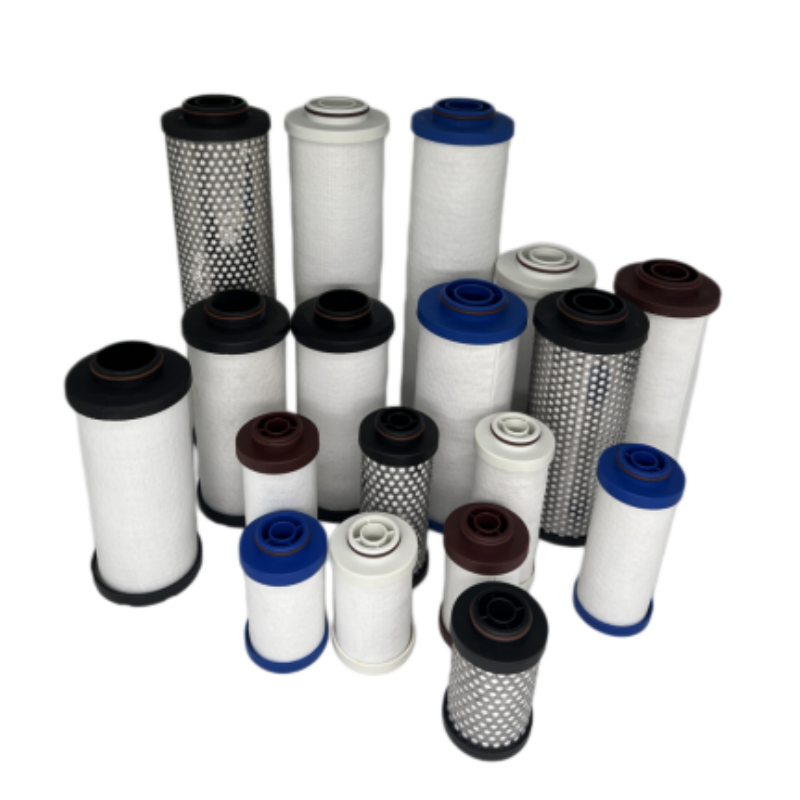
Clean or replace the air filter element every 500 hours to avoid dust blockage affecting air intake efficiency. Replace special compressor oil regularly according to the equipment manual to ensure rotor lubrication and cooling effect.
2. Regularly Discharge Water and Impurities
Compressed air will produce condensed water during operation. Regularly discharge the water and impurities in the air storage tank and pipeline to prevent water pollution from affecting air quality and corroding equipment.
3. Check Operating Parameters Regularly
Regularly check the operating pressure, temperature, and current of the screw air compressor. Once abnormal fluctuations are found, stop the machine for inspection in time to avoid equipment failure.
FAQs About Screw Air Compressor
Q1: What is the difference between a screw air compressor and a piston air compressor?
A screw air compressor features continuous air output, stable pressure, low noise, and long continuous working time, suitable for long‑term industrial production. A piston compressor has intermittent exhaust, unstable pressure, high noise, and is only suitable for intermittent and low‑demand small‑scale use.
Q2: Is a variable frequency screw air compressor worth buying?
Yes. For enterprises with long working hours and unstable air consumption, a variable frequency screw air compressor can save 20%–30% of electricity costs every year. The energy‑saving effect is obvious, and the long‑term return on investment is high.
Q3: Do I need an oil‑free screw air compressor for ordinary factory use?
No. Ordinary machinery, construction, and packaging industries have low requirements for air purity. A cost‑effective oil‑injected screw air compressor can fully meet production needs. Oil‑free models are only required for high‑purity industries such as food and medical treatment.
Final Thoughts
As the core equipment of industrial air supply, the screw air compressor has become the first choice for modern industrial production by virtue of its stable performance, high efficiency, low energy consumption, and wide applicability. Choosing a suitable type of screw air compressor and doing a good job in daily maintenance can not only ensure the stable operation of production equipment but also effectively reduce the operating cost of enterprises. Whether you are upgrading old equipment or purchasing new industrial air supply equipment, a high‑quality screw air compressor is a reliable long‑term investment.
How Does a Gas Air Compressor Work
