Air Conditioner Filters: Benefits, Types & Maintenance Guide
Air Conditioner Filters: Selection, Function & Maintenance Guide
- Core Functions of Air Conditioner Filters
- Different Types of Air Conditioner Filters
- Fiberglass Disposable Air Conditioner Filters
- Pleated Air Conditioner Filters
- Washable Reusable Air Conditioner Filters
- High MERV Air Conditioner Filters
- How Air Conditioner Filters Protect HVAC Systems
- Preventing Coil and Blower Contamination
- Maintaining Stable Airflow and Energy Efficiency
- Improving Indoor Air Quality with Air Conditioner Filters
- Practical Maintenance for Air Conditioner Filters
- When Should You Replace Air Conditioner Filters?
- Key Tips for Buying Air Conditioner Filters
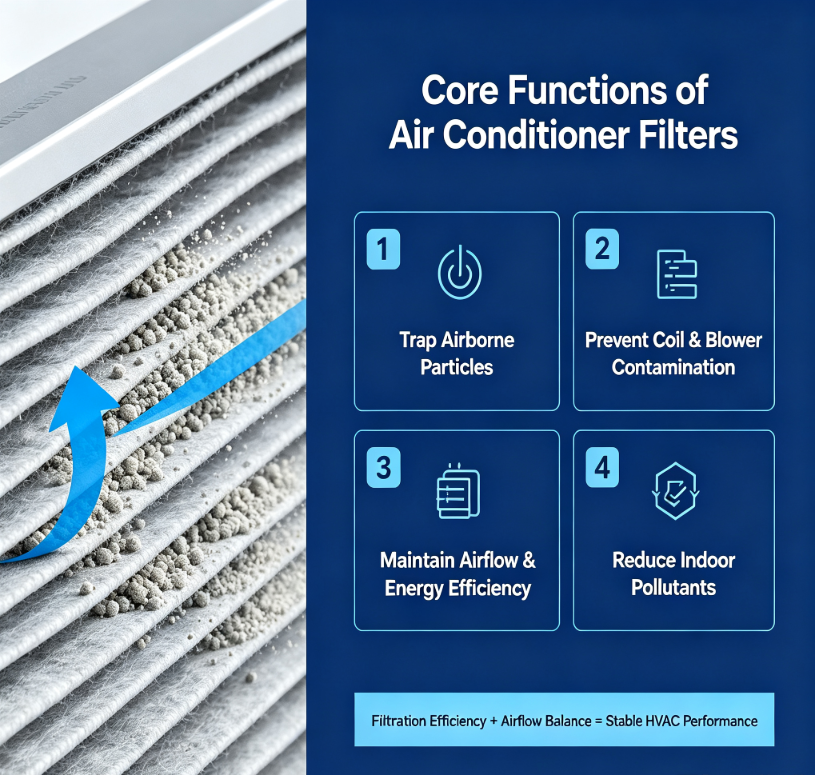
Core Functions of Air Conditioner Filters
Air conditioner filters sit at the return air path of every air conditioning unit, acting as the first line of defense for your whole HVAC system. Many property owners underestimate this simple component and only focus on cooling performance, ignoring the long-term impact of filter quality. The primary job of air conditioner filters is to capture airborne particles before air flows into the AC cabinet. Dust, lint, hair, and fine debris are trapped in filter media, stopping them from entering sensitive internal components. Beyond equipment protection, air conditioner filters also clean recirculating indoor air, lowering particle concentration inside rooms. Properly selected air conditioner filters balance filtration efficiency and airflow resistance, ensuring the cooling unit can operate at its designed capacity without unnecessary strain. Whether you manage residential houses, office buildings, retail spaces or industrial facilities, choosing suitable air conditioner filters is a basic part of HVAC routine management.
Different Types of Air Conditioner Filters
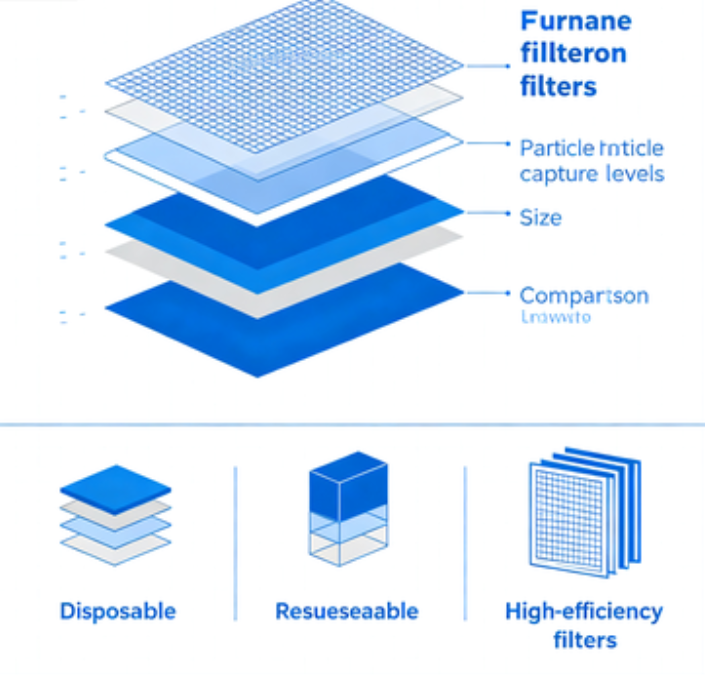
The market offers multiple air conditioner filter variants, built from different raw materials and production processes. Each type targets unique operating environments, dust loads, and air quality requirements. Knowing the differences between air conditioner filters helps buyers avoid mismatched purchases and get stable long-term performance.
Fiberglass Disposable Air Conditioner Filters
Fiberglass air conditioner filters are the most cost-effective choice for basic protection. These lightweight filters feature thin fiberglass media to trap large airborne debris. They create minimal airflow resistance and fit older AC units that cannot handle heavy filter media. The limitation is low fine-particle capture ability, so fiberglass air conditioner filters mainly protect hardware instead of improving indoor air quality significantly. Regular replacement is essential because they clog quickly in dusty environments.
Pleated Air Conditioner Filters
Pleated air conditioner filters dominate residential and light commercial markets. The pleating design expands total filtration surface area within the same frame dimension. More surface area means the filter can hold more dust before clogging, extending service cycles. Pleated air conditioner filters capture pollen, fine dust and pet dander efficiently while maintaining acceptable airflow. This balanced performance makes pleated air conditioner filters the most popular selection for most standard air conditioning systems.
Washable Reusable Air Conditioner Filters
Washable reusable air conditioner filters are manufactured from sturdy synthetic fiber materials. Instead of throwing them away after use, users can rinse accumulated dust away with clean water. Once fully dried, these air conditioner filters can be reinstalled repeatedly. This option reduces waste and cuts recurring purchasing expenses over time. The main limitation is lower fine particle efficiency compared to premium pleated air conditioner filters. Mold risk also rises if the filter remains damp after cleaning.
High MERV Air Conditioner Filters
MERV rating defines the particle capture efficiency of air conditioner filters. Higher MERV rated air conditioner filters can capture microscopic particles such as mold spores and fine particulate matter. These air conditioner filters work well in spaces with strict air quality needs, including medical rooms and allergy-prone households. Still, users must verify HVAC blower capacity. Installing high MERV air conditioner filters on equipment with weak blowers will block airflow and damage your cooling system.
How Air Conditioner Filters Protect HVAC Systems
Without working air conditioner filters, contaminants continuously move into the AC cabinet and build up on internal parts. Gradual accumulation will trigger a series of mechanical problems that lead to expensive repairs or early unit replacement.
Preventing Coil and Blower Contamination
Evaporator coils are critical heat exchange components inside air conditioners. When dust sticks to coil fins, heat transfer efficiency drops sharply. Dirty blower wheels also lose balance and create extra noise and vibration. Air conditioner filters reduce this buildup substantially, keeping coils and blowers clean and functional.
Maintaining Stable Airflow and Energy Efficiency
Blocked air conditioner filters restrict air movement across coils. The AC unit has to run longer to reach target temperature, consuming extra electricity. Clean air conditioner filters preserve designed airflow and help maintain normal energy consumption levels month after month.
Improving Indoor Air Quality with Air Conditioner Filters
Indoor air often contains more suspended particles than outdoor air. As air circulates through the air conditioning system, air conditioner filters trap many irritants. Occupants exposed to less pollen, pet dander and fine dust experience fewer respiratory discomforts. Good air conditioner filters support healthier living and working environments for everyone inside the building.
Practical Maintenance for Air Conditioner Filters
Even premium air conditioner filters lose performance once loaded with dust. A regular inspection schedule is simple yet powerful. Inspect air conditioner filters every 30 days to check dirt buildup. Environment factors including pets, construction dust and smoking will shorten usable life of air conditioner filters.
When Should You Replace Air Conditioner Filters?
Visual inspection is the easiest check method. If dust fully covers the filter media surface, replacement or cleaning is required. Other warning signs include weak vent airflow, rising power bills, continuous AC running and visible dust everywhere in the room. Never continue using heavily clogged air conditioner filters.
Key Tips for Buying Air Conditioner Filters
Always confirm exact physical dimensions before ordering air conditioner filters. Poorly fitted air conditioner filters allow unfiltered air to bypass the media and defeat the filtration purpose. Match MERV rating to your air conditioner specification, do not blindly choose the highest available rating. Consider local dust level and indoor pollution sources. Following these rules helps you select suitable air conditioner filters and maximize system protection and air cleaning results.
Air Filter Products
Pleated Air Conditioner Filters
High surface pleated AC filters for residential HVAC systems, stable airflow and reliable particle capture.
Fiberglass AC Filters
Low cost disposable air conditioner filters for basic system protection, low air resistance.
Washable AC Air Filters
Reusable synthetic air conditioner filters, easy rinse and clean for long time use.
Custom Size Air Conditioner Filters
Custom dimension AC filters available for special HVAC unit requirements.
Best Air Purifier for Mold: Ultimate Buying Guide for Clean, Mold-Free Air (2026)
Related Article